
Quality and standards
Integrating ISO 9001, 14001 and 45001: what actually changes
Running three management systems separately triples the maintenance and confuses everyone who has to use them. Here is what integration involves and where the savings really come from.
Most organisations arrive at integration by accident. ISO 9001 came first because a customer asked for it. ISO 14001 followed when the EPA permit conditions tightened. ISO 45001 came last, usually after an incident or a tender requirement. Each was built by a different person, at a different time, often with a different consultant.
What you end up with
Three manuals. Three document control systems. Three internal audit programmes running to different calendars. Three management reviews. And a document register in which the same procedure appears three times with slightly different wording, so that nobody is entirely sure which version governs.
What the standards actually share
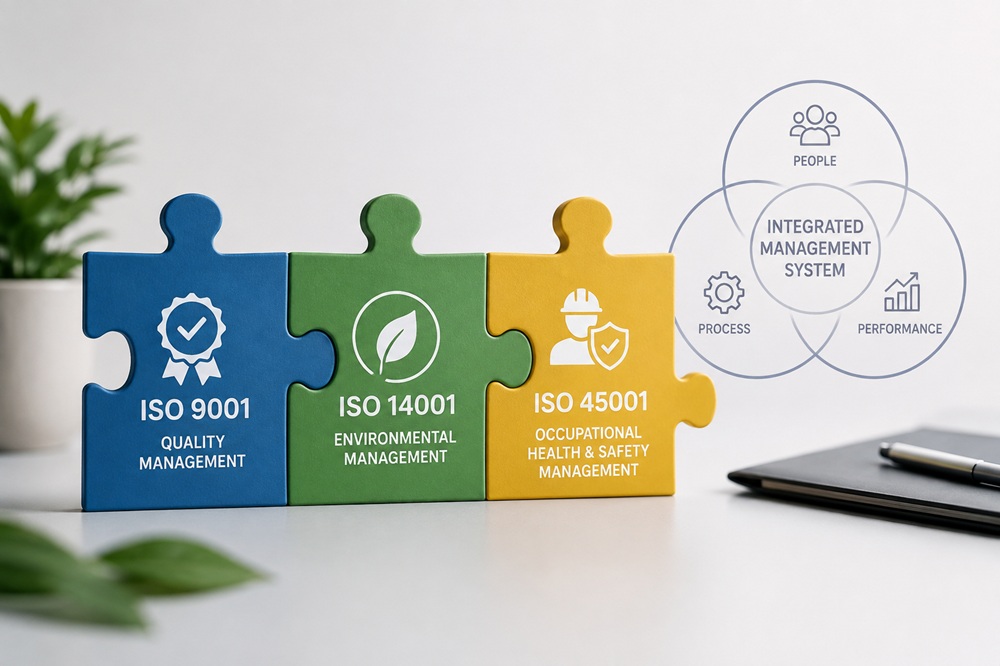
Since the 2015 revisions, ISO 9001, ISO 14001 and ISO 45001 use the same high level structure. Clauses four through ten are the same headings in the same order: context of the organisation, leadership, planning, support, operation, performance evaluation and improvement. This is not a coincidence. It was designed so that integration would be practical.
That means your context analysis, interested party register, leadership commitments, competence arrangements, document control, internal audit process and management review can all be single, shared elements. In our experience that covers around sixty per cent of the documented information.
What stays separate
The technical core of each standard remains distinct and should. Aspects and impacts belong to ISO 14001. Hazard identification and risk assessment belong to ISO 45001. Product and service requirements belong to ISO 9001. Trying to merge these produces a register that serves none of them well.
Where the return actually comes from
Clients usually expect the saving to come from the documentation. It does not. It comes from the audit programme and the management review. One combined internal audit cycle instead of three, one management review instead of three, and one combined certification visit instead of three separate ones. That is where the days come back.
How to sequence it
Start with a gap analysis across all three standards at once, mapping overlap and duplication rather than assessing each in isolation. Design the shared architecture next. Only then consolidate the documented information. Attempting to merge documents before agreeing the architecture produces a very tidy document set built on the wrong structure.
Share this
Related reading